


Home / Casino Comparisons / Progressive Jackpot vs Fixed Jackpot Slots: The Ultimate Guide
Progressive Jackpot vs Fixed Jackpot Key Takeaways
When it comes to slot machines, the central question is whether to chase life-changing sums or aim for consistent, predictable payouts.
- Progressive jackpot pools accumulate across a network of machines, often reaching millions, but come with lower base RTP and higher variance.
- Fixed jackpot slots offer a predetermined top prize, usually with higher overall RTP and more frequent smaller wins.
- Your choice between the two should factor in your risk tolerance, session length, and whether you prioritize entertainment or the chance at a record payout.
Table of Contents
- What Are Progressive Jackpot Slots?
- How the Jackpot Mechanism Works
- What Are Fixed Jackpot Slots ?
- Why Fixed Prizes Appeal to Regular Players
- Progressive Jackpot vs Fixed Jackpot : Key Differences in Mechanics
- Prize Pool Accumulation
- Wagering Requirements
- Return to Player (RTP)
- Volatility and RTP: How They Affect Your Play
- Which Type Fits Your Playing Style?
- Tips for Choosing Between Progressive vs Fixed Jackpot Slots
- Know Your Bankroll
- Check the Jackpot Size
- Read the Paytable
- Useful Resources
- What is the main difference between progressive and fixed jackpot slots ?
- Do progressive jackpot slots have worse odds than fixed slots?
- Do I have to bet max to win a progressive jackpot ?
- Can I win a progressive jackpot on a small bet?
- Are fixed jackpot slots better for beginners?
- Which type of slot has a higher RTP?
- Can progressive jackpots be won online?
- Are there different types of progressive jackpots?
- Do fixed jackpot slots ever have progressive elements?
- Is it possible to beat a progressive jackpot slot?
- What is the biggest progressive jackpot ever won?
- Do fixed jackpot slots have better win frequency?
- How do I know if a slot is progressive or fixed?
- Which is more popular among high rollers?
- Can I play both types with the same strategy?
- What does RTP stand for?
- Are progressive jackpot slots worth playing?
- Do progressive jackpots reset after a win?
- Are fixed jackpot slots less exciting?
- What should I prioritize when choosing between the two?
What Are Progressive Jackpot Slots?
A progressive jackpot is a prize pool that grows every time a player makes a wager on a connected network of machines. A small percentage of each bet — typically between 1% and 5% — is added to the jackpot meter. This pool can link dozens, hundreds, or even thousands of slot terminals across multiple casinos, allowing the top prize to balloon into the millions.
Most progressive jackpot slots require a maximum bet to qualify for the full jackpot, though some offer smaller tiers for lower stakes. Examples include games like Mega Moolah, Hall of Gods, and the Wheel of Fortune series. These slots are best known for creating overnight millionaires, but the odds of hitting the top prize are extremely slim — often in the tens of millions to one. For a related guide, see Top Online Casino Games for Beginners Malaysia: Complete Guide to Jackpot Slots, Baccarat, Live Roulette, and Live Blackjack.
How the Jackpot Mechanism Works
Progressives use one of three main structures: standalone, local, or wide-area. A standalone progressive is limited to a single machine. A local progressive links machines within one casino. A wide-area progressive — the most famous type — connects machines across multiple casinos via a central server. The larger the network, the faster the jackpot grows, but the odds of winning become correspondingly longer.
What Are Fixed Jackpot Slots?
Fixed jackpot slots offer a top prize that does not change regardless of how many players spin the reels. The maximum payout is predetermined by the game’s paytable, often expressed as a multiple of your bet (for example, 2,500x or 10,000x). Because the jackpot amount is set, the game’s RTP and volatility can be calculated with much greater precision than with progressives.
These slots are typically less volatile than progressive machines. Players can expect a steadier stream of mid-tier wins, and the house edge is generally lower. Popular fixed jackpot slots include classics like Starburst, Gonzo’s Quest, and Book of Dead, where the max win is clearly stated and never changes.
Why Fixed Prizes Appeal to Regular Players
For players who value predictability, fixed jackpot slots provide a more transparent gaming experience. You know exactly what the top prize is before you spin, and you never have to worry about missing a win because you didn’t bet enough. This structure is particularly attractive for those who play longer sessions with a set budget, as it allows for better bankroll management.
Progressive Jackpot vs Fixed Jackpot: Key Differences in Mechanics
Understanding the mechanical differences between these two jackpot types is essential for choosing the right game.
Prize Pool Accumulation
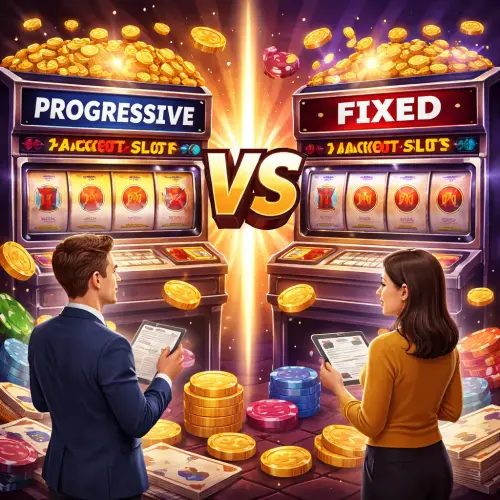
In a progressive jackpot, the prize pool is dynamic. It starts at a base amount and climbs until one lucky player hits the winning combination. In a fixed jackpot slot, the top prize is static — it never increases, no matter how many people play.
Wagering Requirements
Progressives almost always require a maximum bet to qualify for the full jackpot. Fixed slots typically allow you to win the top prize on any spin, regardless of your bet size, though the payout scales with your wager.
Return to Player (RTP)
The RTP of a fixed jackpot slot is usually higher — often 96% to 98% — because the jackpot contribution is not being diverted into a growing pool. Progressive jackpot slots, by contrast, often have an RTP in the low 90s percentile, with the difference funneled into the prize fund.
| Feature | Progressive Jackpot | Fixed Jackpot Slot |
|---|---|---|
| Prize structure | Grows with each bet | Fixed amount |
| Max bet required | Usually yes | No |
| Typical RTP | 89% – 93% | 96% – 98% |
| Volatility | Very high | Low to medium |
| Win frequency | Low | Moderate to high |
| Top prize potential | Millions possible | Typically capped at thousands |
Volatility and RTP: How They Affect Your Play
Volatility, or variance, measures the risk level of a slot game. Progressive jackpot slots are among the most volatile games in any casino. You may spin hundreds or thousands of times without a significant win, but when the jackpot hits, it can change your life. Fixed jackpot slots, on the other hand, offer lower volatility, meaning you’ll see smaller wins more frequently, which helps sustain your bankroll over a longer session. For a related guide, see Slot Volatility Explained: Full Guide on Low vs High Volatility Slots.
Which Type Fits Your Playing Style?
If you have a limited budget and want to play for an hour or more, fixed jackpot slots are generally the better choice. If you have a larger bankroll and enjoy the thrill of a potential seven-figure payout — and you’re comfortable with long dry spells — a progressive jackpot may be worth the risk.
Tips for Choosing Between Progressive vs Fixed Jackpot Slots
Making the right choice depends on your goals and comfort level. Here are practical tips to guide your decision.
Know Your Bankroll
Set a clear budget before you start. For progressive jackpot slots, allocate only an amount you are willing to lose entirely, since the odds are heavily against you. For fixed jackpot slots, you can stretch your budget with smaller, more frequent bets.
Check the Jackpot Size
A progressive jackpot that has grown well above its base amount may offer better value, because the expected return increases as the pool gets larger. Some players wait for a progressive to reach a certain threshold before playing.
Read the Paytable
Always review the paytable for both types. For fixed jackpot slots, the paytable clearly shows the maximum win. For progressive jackpot slots, check whether the jackpot is only available on max bet and whether there are smaller progressive tiers.
Useful Resources
For further reading on slot mechanics and jackpot strategies, visit Casino City Times and The Guardian gambling advice.
Frequently Asked Questions About Progressive Jackpot vs Fixed Jackpot Slots
What is the main difference between progressive and fixed jackpot slots ?
The main difference is that progressive jackpots grow as players bet and can reach millions, while fixed jackpots offer a predetermined top prize that never changes.
Do progressive jackpot slots have worse odds than fixed slots?
Yes, generally. Progressive slots have a lower base RTP and higher variance, meaning you win less often and the house edge is larger compared to most fixed jackpot slots.
Do I have to bet max to win a progressive jackpot ?
In most cases, yes. Many progressive jackpot slots require you to place the maximum bet to be eligible for the full jackpot prize. Always check the game rules before playing.
Can I win a progressive jackpot on a small bet?
Some progressive slots offer a smaller “mini” or “minor” jackpot for lower bets, but the life-changing top jackpot almost always requires a max bet.
Are fixed jackpot slots better for beginners?
Yes, fixed jackpot slots are generally more suitable for beginners because they have lower volatility, higher RTP, and no requirement to bet max for the top prize.
Which type of slot has a higher RTP?
Fixed jackpot slots typically have higher RTP, often between 96% and 98%, while progressive jackpot slots are usually in the 89% to 93% range.
Can progressive jackpots be won online?
Yes, many online casinos offer progressive jackpot slots that are part of wide-area networks, allowing players to win huge prizes from home.
Are there different types of progressive jackpots?
Yes, the three main types are standalone, local (within one casino), and wide-area (across multiple casinos). Wide-area progressives offer the largest prizes.
Do fixed jackpot slots ever have progressive elements?
Some fixed jackpot slots offer bonus rounds that can multiply your win, but the top prize itself remains fixed and does not increase over time.
Is it possible to beat a progressive jackpot slot?
No slot machine can be beaten in the long run because the house edge is built into the game design. However, waiting for a large progressive can improve your expected return in the short term.
What is the biggest progressive jackpot ever won?
The largest online progressive jackpot win was over €18.9 million on Mega Moolah in 2015. Land-based records include over $39 million on the Megabucks slot in Las Vegas.
Do fixed jackpot slots have better win frequency?
Yes, fixed jackpot slots typically have higher hit frequencies, meaning you win smaller amounts more often, which helps sustain play for longer sessions.
How do I know if a slot is progressive or fixed?
Check the paytable or game information screen. Progressive slots will display a growing jackpot meter, while fixed slots will show a static max win amount.
Which is more popular among high rollers?
High rollers often prefer progressive jackpot slots because of the potential for massive wins, though some also enjoy the higher RTP and stability of fixed slots.
Can I play both types with the same strategy?
No, strategies differ. For progressives, you should only play when the jackpot is large and you can afford max bets. For fixed slots, focus on bankroll management and choosing games with high RTP.
What does RTP stand for?
RTP stands for Return to Player. It is the percentage of all wagered money that a slot is expected to pay back to players over time. Higher RTP means better long-term value.
Are progressive jackpot slots worth playing?
If you enjoy the excitement of a potentially huge win and can afford the higher risk, progressive slots can be entertaining. However, they are not a smart choice for consistent returns.
Do progressive jackpots reset after a win?
Yes, after a jackpot is won, the prize pool resets to its base amount and begins growing again from that point.
Are fixed jackpot slots less exciting?
Not necessarily. Many fixed jackpot slots feature engaging bonus rounds, free spins, and multipliers that provide plenty of excitement without the extreme variance of progressives.
What should I prioritize when choosing between the two?
Prioritize your risk tolerance and playing goals. If you want a shot at a huge payout and can accept long losing streaks, go progressive. If you prefer steady, sustainable play, choose fixed jackpot slots.