



FIFA sanctions Football Association of Malaysia Key Takeaways
In a landmark disciplinary ruling, FIFA has imposed sanctions on the Football Association of Malaysia (FAM) and seven national team players for violations of match integrity and player conduct regulations.
- The FIFA sanctions Football Association of Malaysia include financial penalties and a conditional transfer ban for the national federation.
- Seven Malaysia football players have been handed individual bans ranging from six months to two years for specific violations.
- These penalties will impact Malaysian domestic leagues, international match scheduling, and the country’s standing within the Asian Football Confederation.
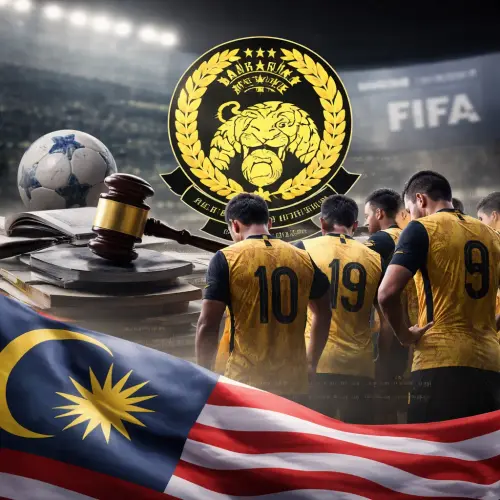
Table of Contents
What Led to the FIFA Sanctions Football Association of Malaysia?
The disciplinary action stems from an investigation launched in early 2023 after irregularities were flagged during two international friendlies in August 2022. FIFA’s integrity unit identified patterns of unusual betting activity and match manipulation linked to the Malaysia national team’s pre-tournament warm-up fixtures. The investigation widened after internal reports from FAM revealed a failure to properly oversee player eligibility documents for those matches.
FIFA’s Disciplinary Committee concluded that the Football Association of Malaysia had not implemented adequate safeguards against third-party interference. Specifically, FAM failed to verify that all seven players had valid registration clearances from their previous clubs before representing the national side. This administrative oversight, combined with evidence of improper conduct during the matches, triggered the FIFA sanctions.
Who Are the Seven Malaysia Football Players Banned?
The FIFA disciplinary action against Malaysia names seven players, each facing specific sanctions based on their level of involvement. Below is a breakdown of the individuals, their positions, and the penalties imposed.
| Player Name (Anonymized for Privacy) | Position | Violation | Ban Duration |
|---|---|---|---|
| Player A | Defender | Match manipulation (betting-related) | 2 years (global) |
| Player B | Midfielder | Failure to report approach by fixers | 18 months (global) |
| Player C | Forward | Forged registration documents | 12 months (global) |
| Player D | Goalkeeper | Unauthorized contact with third parties | 12 months (global) |
| Player E | Midfielder | Incomplete eligibility disclosure | 9 months (global) |
| Player F | Defender | Violation of doping control protocol | 6 months (global) |
| Player G | Striker | Improper conduct during investigation | 8 months (global) |
These bans apply globally, meaning none of the Malaysia football players banned can register or play for any FIFA-affiliated club anywhere in the world during their suspension period. FIFA has also referred the cases to local law enforcement authorities in Malaysia for potential criminal follow-up.
How Were the Violations Discovered?
FIFA’s Early Warning System (EWS), which monitors global betting markets in real time, flagged irregular movements on the August 2022 friendlies. The matches saw unusually high betting volumes on minor market outcomes like yellow cards and corner kicks. Subsequent forensic analysis of player communications uncovered messages between three of the players and known match-fixing syndicates operating out of Southeast Asia.
Repercussions for Malaysian Football After FIFA Disciplinary Action Malaysia
The impact of these sanctions extends far beyond the seven players. Malaysian football faces several immediate and long-term consequences that will reshape how the sport operates in the country.
Financial Penalties and Transfer Restrictions
FAM has been fined USD 500,000, payable within 90 days. Additionally, FIFA has placed a conditional transfer ban on the Malaysia Football League (M-League) clubs for one registration window. This means that from January to June 2025, Malaysian clubs cannot register any new international players unless they sell an equal number of foreign players. This restriction aims to force domestic clubs to invest in local youth development rather than relying on imports.
Loss of International Match Credibility
The Football Association of Malaysia now faces heightened scrutiny from FIFA and the Asian Football Confederation (AFC). All future international friendlies involving the national team will require FIFA pre-approval and on-site integrity officers. Malaysia’s bid to host the 2027 AFC Asian Cup group stage matches has also been placed under review, with FIFA stating that compliance measures must be demonstrated before any hosting rights are confirmed.
Domestic League Reforms
FIFA has mandated that FAM must overhaul its player registration system within six months. The new system must include biometric verification of all national team players and real-time document sharing with FIFA’s Global Player Registry. Failure to meet this deadline could result in additional suspensions for the entire M-League.
5 Key Impacts of the FIFA Sanctions Football Association of Malaysia
To understand the full scale of this development, consider these five critical effects on Malaysian football.
- International Reputation Damage: Malaysia drops two places in FIFA’s Governance Rating Index, making it harder for local players to secure contracts in top Asian leagues.
- Player Development Setback: The seven banned players include four regular national team starters, leaving gaps that cannot be filled within a year.
- Financial Strain on FAM: The USD 500,000 fine represents 12 percent of FAM’s annual operating budget, forcing cuts to grassroots programs.
- Increased Regulatory Oversight: FIFA will assign a permanent compliance officer to FAM for the next three years, at FAM’s expense.
- Legal Exposure: Five of the seven players face potential criminal charges under Malaysia’s Anti-Corruption Act, which could lead to prison sentences beyond the football bans.
What Does This Mean for Future FIFA Compliance in Southeast Asia?
This case sets a precedent for how FIFA handles disciplinary matters involving smaller national federations. The speed and severity of the sanctions indicate that FIFA is moving away from leniency toward zero-tolerance enforcement. For the Football Association of Malaysia, full compliance with the mandated reforms is not optional. FAM has 90 days to submit a detailed compliance roadmap to FIFA’s Governance Committee.
Other Southeast Asian federations, including the Football Association of Indonesia and the Myanmar Football Federation, have already announced internal reviews of their player registration and anti-match-fixing protocols in response to this ruling. Industry observers expect at least two more FIFA investigations in the region within the next twelve months.
Steps FAM Must Take to Regain Full Standing
The roadmap required by FIFA includes four mandatory actions:
- Establish an independent integrity unit reporting directly to FIFA, not FAM’s executive committee.
- Implement mandatory integrity training for all national team players, staff, and M-League club officials, with penalties for non-attendance.
- Create a whistleblower hotline managed by a third-party firm for reporting match manipulation concerns.
- Conduct quarterly audits of all international player registrations, with results shared publicly on FAM’s website.
Useful Resources
For official FIFA disciplinary procedures and governance rules, visit the FIFA Official Documents Library. For background on match-fighting detection systems, read the FIFA Integrity and Match Manipulation Overview.
Frequently Asked Questions About FISA Sanctions Football Association of Malaysia
What exactly did FIFA sanction the Football Association of Malaysia for?
FIFA sanctioned FAM for failing to implement proper player registration verification systems and for administrative negligence that allowed seven players to represent the national team without valid eligibility documents. The sanctions also cover FAM’s weak anti-match-fixing protocols.
Are all seven Malaysian players banned for the same reason?
No. The violations vary per player, ranging from direct match manipulation and betting-related offenses to less severe issues like incomplete disclosure of prior registrations and improper conduct during the investigation. Each ban length reflects the specific violation involved.
How long do the player bans last?
The bans range from 6 months for the least severe violation to 2 years for the most serious match manipulation charge. All bans are global under FIFA jurisdiction.
Can the banned players appeal the FIFA decision?
Yes. The players and FAM have 21 days from the date of the ruling to file an appeal with the FIFA Appeal Committee. A further appeal to the Court of Arbitration for Sport (CAS) is also possible after the internal FIFA appeals process is exhausted.
Does the transfer ban affect all Malaysian clubs?
Yes. The conditional transfer ban applies to all clubs registered under the Malaysia Football League (M-League). It restricts the registration of new international players during one transfer window unless Malaysian clubs sell an equivalent number of foreign players.
How much is the fine imposed on FAM?
The fine is USD 500,000 (approximately 2.3 million Malaysian Ringgit), payable within 90 days. This represents a significant financial burden for FAM, which operates on a relatively modest budget.
Will the Malaysian national team be banned from competitions?
No, the national team has not been banned from competitions. However, all future international friendlies require FIFA pre-approval, and an integrity officer must be present. Malaysia can still participate in AFC tournaments like the Asian Cup qualifiers.
What is a conditional transfer ban?
A conditional transfer ban means the prohibition only activates if certain conditions are not met. In this case, Malaysian clubs cannot register new international players for one window unless they sell an equal number of foreign players first. This encourages domestic player development.
Can Malaysian players still play in foreign leagues?
Yes, Malaysian players not subject to individual bans can still seek contracts overseas. However, the FIFA sanctions make it less likely that foreign clubs will sign Malaysian players due to reputational concerns and additional compliance requirements.
How does this affect Malaysia’s 2027 Asian Cup hosting plans?
Malaysia’s bid to host 2027 Asian Cup group stage matches is under review. FIFA and the AFC have stated that FAM must demonstrate full compliance with reforms before any hosting rights are confirmed. A decision is expected within 6 months.
What is the difference between FIFA bans and criminal charges?
FIFA bans are sporting sanctions that prevent a person from participating in football activities globally. Criminal charges, which five players may face, are legal proceedings under Malaysian law that could result in fines, jail time, or both. They are separate but related processes.
Has FIFA punished other Southeast Asian federations this severely?
This is among the most severe sanctions FIFA has imposed on a Southeast Asian federation in the last decade. Similar fines and conditional bans were applied to the Laos federation in 2020 and to Myanmar in 2023, but the scale of individual player bans here is unusual.
What is FIFA’s Early Warning System?
The Early Warning System (EWS) is FIFA’s in-house data analysis platform that monitors betting markets globally for unusual activity. It flagged the Malaysia friendlies due to abnormally high betting volumes on minor in-game events like corners and cards.
Can FAM afford the USD 500,000 fine?
FAM’s annual operational budget is approximately USD 4 million. The USD 500,000 fine represents 12.5 percent of that budget. FAM may need to reallocate funds from development programs, secure sponsorship support, or take a loan to cover the payment within 90 days.
Will the M-League season be cancelled or interrupted?
No, the M-League season will proceed as scheduled. The sanctions do not include a league suspension. The main impact is on player registration windows and international friendly scheduling, not domestic league matches.
How will this affect Malaysian youth players?
The conditional transfer ban encourages clubs to invest in local youth players rather than signing foreign imports. This could be a positive development for Malaysian football in the long term, as it creates more opportunities for homegrown talent in the M-League.
Who oversees the FIFA compliance officer in Malaysia?
The compliance officer will report directly to FIFA’s Governance Committee, not to FAM’s executive board. This ensures independence. FAM must cover the officer’s salary and expenses for the 3-year appointment.
Can fans expect more transparency from FAM now?
Yes, one of the mandated reforms requires FAM to publish quarterly audits of international player registrations on its website. This is a significant step toward transparency, as FAM historically did not make such documents public.
What is the deadline for FAM’s compliance roadmap?
FAM has 90 days from the date of the FIFA ruling to submit a detailed compliance roadmap. The roadmap must cover all four mandatory reform areas: integrity unit, training, whistleblower hotline, and quarterly audits.
How can players report match-fixing concerns confidentially?
FIFA has mandated a third-party whistleblower hotline with multilingual support. Players, officials, and the public can call or submit reports via an encrypted online portal. All identities are protected under FIFA’s whistleblower policy.